


You yelled. Or you handed over the tablet and walked into another room just to breathe. Or you sat through bedtime distracted, your mind somewhere else entirely. And now it’s quiet, and here you are — searching these words at some ungodly hour, wondering if you’re doing this all wrong.
First: the fact that you’re asking this question matters. A lot. Research on parenting guilt consistently finds that the mothers most consumed by “am I doing enough?” are, by every meaningful measure, trying the hardest. The moms who truly don’t care? They’re not up at midnight questioning themselves.
But let’s not just reassure you with a pat on the back and send you on your way. Let’s actually look at what the evidence says — because it might change the way you see yourself entirely.
Is it normal to feel like a bad mom?
Not just normal — nearly universal. A BabyCenter survey found that 94% of moms experience parenting guilt. A more recent survey of 1,000 mothers by Little Sleepies found that over 76% experience mom guilt at least sometimes — and nearly 1 in 4 feel it often. If you’ve ever described yourself as a bad mom, you’re in the overwhelming majority of mothers who have said the same thing.
This isn’t just a cultural moment or a social media phenomenon. Researchers have studied parental guilt across cultures and found it’s a near-constant feature of modern motherhood — particularly in Western societies that place enormous pressure on mothers to be endlessly patient, stimulating, emotionally available, and professionally competent, all at once. Sociologist Sharon Hays coined the term intensive mothering to describe this impossible standard — the cultural expectation that a good mother must be child-centered, expert-informed, and always emotionally attuned. When real life collides with that standard, guilt is almost inevitable.

Why do moms feel more guilt than dads?
It’s not because mothers are more sensitive or more neurotic. It’s structural. Research published in the British Journal of Social Psychology found that internalized gender stereotypes predict significantly higher guilt in working mothers compared to fathers in identical parenting situations. Mothers are culturally expected to prioritize family above self — and any deviation from that triggers guilt, whether or not it’s actually warranted.
What this means practically: when a dad works late, he’s often seen as providing. When a mom works late, she may feel like she’s failing. Same action, entirely different emotional consequence. The guilt isn’t a character flaw. It’s a symptom of a double standard that has been baked into how we talk about mothers.
This is worth sitting with: your guilt may be a measure of how deeply you’ve internalized a standard that was never meant to be met by a single human being.
What’s the difference between guilt and shame — and why does it matter?
Guilt says: I did something wrong. Shame says: I am wrong. These feel similar in the moment, but they lead to very different places. Guilt can be useful — it nudges you toward repair, toward apology, toward doing things differently. Shame just makes you smaller. It pulls you away from your child instead of toward them.
When you snap and then spend the rest of the evening believing you’ve permanently damaged your child, that’s not guilt anymore. That’s shame. And shame is not a reliable narrator. It lies about who you are based on a single moment.
The question “am I a bad mom?” is almost always shame speaking — not guilt. It’s not asking whether you did something worth correcting. It’s asking whether you, as a person, are fundamentally deficient. And the answer to that question, research says, is no.
What does “good enough” mothering actually mean?
In the mid-20th century, British pediatrician and psychoanalyst Donald Winnicott introduced a concept that still holds up today: the “good enough mother.” His argument was radical for its time and liberating for ours: children don’t need perfect parents. In fact, a perfect parent would actually deprive a child of the small frustrations and disappointments that build resilience.
Developmental researcher Dr. Ed Tronick later found through his famous “still face” experiments that in healthy parent-child pairs, caregivers are only accurately in sync with their baby’s signals about 30% of the time — and yet most children still develop secure attachment. The most important factor wasn’t perfect attunement. It was whether the parent noticed the miss and came back to repair it.
Read that again: being fully in sync with your child only 30% of the time is consistent with a securely attached, healthy child. You are not failing. You are, by every scientific measure, within the range of normal — and probably well above it.

What actually matters is repair
Clinical psychologist Dr. Becky Kennedy, named “The Millennial Parenting Whisperer” by TIME Magazine, has built her entire practice around one core insight that every guilt-ridden parent needs to hear: in her words, “the only way to repair is to mess up.”
In her book Becky Kennedy, Good Inside: A Guide to Becoming the Parent You Want to Be (2022), Dr. Kennedy makes the case that parenting doesn’t have to be defined by moments of struggle — it should be defined by whether you connected with your child after the struggle. An apology that takes ownership without blame-shifting. A moment of sitting together after the storm. A simple: “I shouldn’t have yelled. That wasn’t okay. I love you.” These moments of repair don’t just fix the rupture — according to attachment research, they actually help children develop emotional resilience and learn that relationships can survive disconnection.
You are not building a highlight reel. You are building a relationship. And relationships are made of rupture and repair, not perfection.
What are the actual signs of a bad mom?
Since the question is on the table: yes, truly harmful parenting exists. It looks like consistent neglect — chronically failing to meet a child’s basic physical or emotional needs. It looks like abuse. It looks like deliberate cruelty. It looks like a complete absence of repair — not occasional misattunement, but sustained emotional abandonment.
It does not look like losing your temper on a hard day. It does not look like choosing the easy dinner or the quiet afternoon on screens. It does not look like crying in the bathroom because you have nothing left. It does not look like googling “am I a bad mom” because you’re worried you’re not doing enough.
The very act of caring — of lying awake wondering, of searching for better — is itself a kind of love. You can’t make that move if you don’t care deeply about your child. A mom who truly doesn’t care is not searching for this article.
Am I a bad mom for yelling at my child?
One of the most common searches that lands parents on pages like this one. The short answer: no — but the guilt is telling you something worth listening to. Yelling is a response to overwhelm, not evidence of a character flaw. When you lose it, something in you was already running on empty. The yelling is the signal; the exhaustion is the cause.
What matters most, again, is what you do after. A simple, honest repair conversation — “I got really frustrated and I yelled and that wasn’t okay. I’m sorry” — models emotional accountability for your child in a way that no perfect parenting day ever could. Research on attachment shows that parents who rupture and repair actually help children develop stronger relationship skills than those who manage to stay perfectly calm but never model how to acknowledge a mistake.
Your child is not building a case against you. They’re watching to see if you come back. And you always do.
If the voice that asks “am I a bad mom?” is loud in your head — the one that replays your worst moments and treats them as proof of who you are — you don’t have to just white-knuckle through it. Daily Parent is a free iOS app built exactly for this moment: daily affirmations rooted in science, designed to help parents like you quiet that inner critic, build confidence in your instincts, and reconnect with the parent you actually are. Not the one your worst day tries to convince you of.
How do I stop feeling like a bad mom?
Not by becoming perfect. That path doesn’t exist. But a few things genuinely help:
Name what you’re actually feeling. Is it guilt — something specific you wish you’d done differently? Or is it shame — a creeping sense that you’re fundamentally not enough? Guilt you can act on. Shame you need to challenge, not obey.
Repair when you’ve missed. Don’t let the bad moment hang in the air. Go back. Name it. Apologize. Move forward. It does more good than you know.
Audit your comparison sources. A survey of 1,000 mothers found that nearly 60% linked their parenting guilt to social media. Curate your feeds like your mental health depends on it — because it does.
Say the true thing out loud. “I’m exhausted. I’m doing my best. I love my child.” Repeat as needed. These aren’t just affirmations — they’re accurate descriptions of who you are.
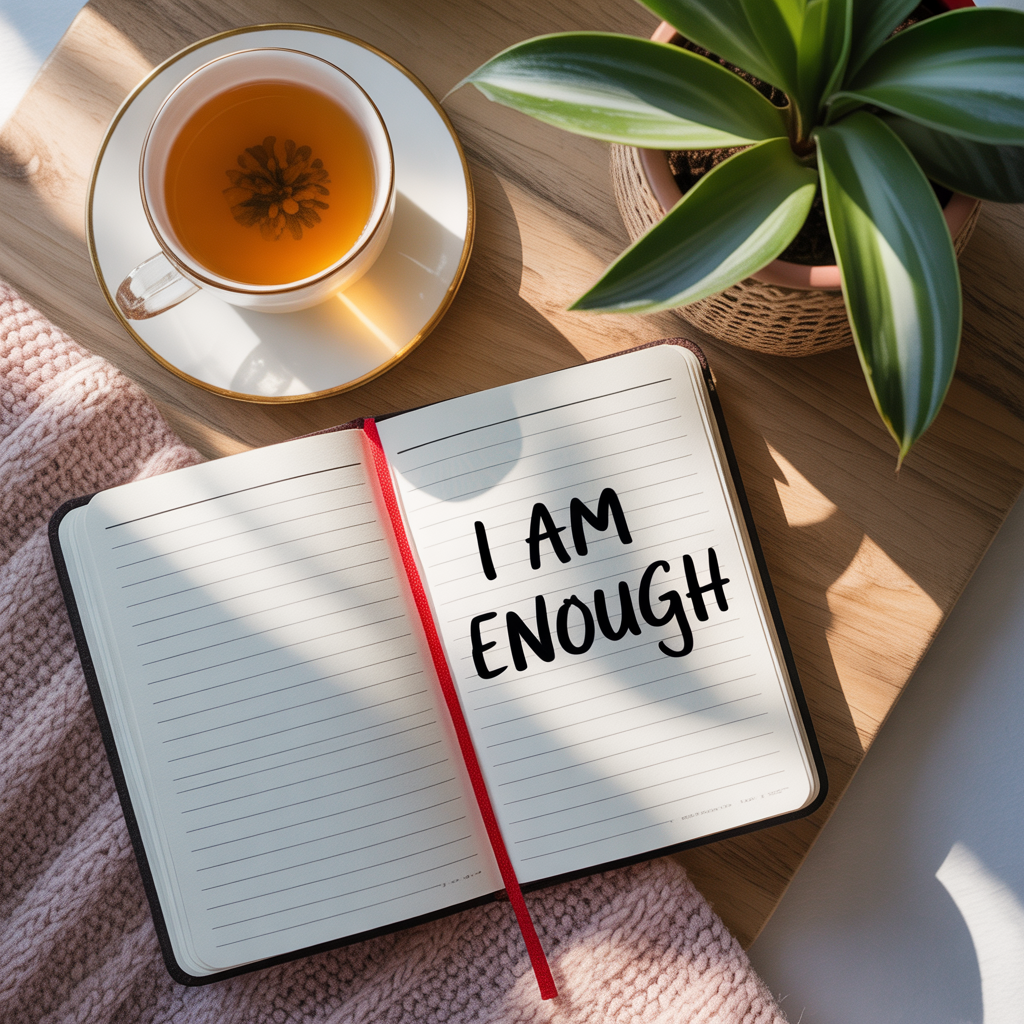
You are raising a child in a culture that gives mothers impossible standards, insufficient support, and an endless stream of comparison material. The fact that you still show up — tired, imperfect, trying — is not a sign of failure. It’s the definition of love.
You’re not a bad mom. You’re a real one.
Frequently Asked Questions
Is it normal to feel like a bad mom every day?
Yes — research shows the vast majority of mothers experience ongoing parenting guilt, with many feeling it multiple times a day. Chronic guilt is more a reflection of unrealistic cultural expectations placed on mothers than evidence of actual poor parenting. If guilt is impacting your mental health, speaking with a therapist who specializes in maternal mental health can help.
What are the signs of a bad mom?
Genuinely harmful parenting involves sustained neglect, abuse, or consistent failure to meet a child’s basic physical and emotional needs. Occasional yelling, impatience, or imperfect moments do not make someone a bad mother. The willingness to reflect, repair, and keep trying is the hallmark of a good parent.
Am I a bad mom for yelling at my child?
A single moment of losing your temper doesn’t define you as a parent. What matters most in attachment research is whether you repair afterward — acknowledging what happened, taking responsibility, and reconnecting. Children are remarkably resilient; they benefit from watching adults model accountability and repair.
Does asking “am I a bad mom?” mean I care?
Yes — strongly. Parents who genuinely don’t care about their child’s wellbeing don’t search this question. The anxiety and self-scrutiny behind this question are themselves evidence of deep parental investment. You cannot worry this much about something that doesn’t matter to you.
What is “mom guilt” and why do so many moms have it?
Mom guilt is the chronic feeling of falling short as a parent — often tied to the cultural ideology of “intensive mothering,” which sets impossible standards for modern mothers. Research shows mothers experience significantly more parenting guilt than fathers, largely due to deeply internalized gender expectations. It is extremely common and does not reflect the reality of how well most mothers are actually parenting.
What does “good enough mother” mean?
The term comes from psychoanalyst D.W. Winnicott and describes a parent who doesn’t need to be perfect — just present and responsive enough, with the willingness to repair when things go wrong. Research by Dr. Ed Tronick shows that parents are only fully in sync with their child about 30% of the time, and that’s sufficient to build secure attachment. Perfection is neither achievable nor necessary.
How do I stop feeling like a bad mom?
Start by distinguishing guilt (a specific action worth correcting) from shame (a global verdict on your worth as a person). Practice repair after difficult moments rather than avoidance. Limit social media comparison. Seek out community with honest parents, not highlight reels. And remember: the standard you’re holding yourself to was never designed to be met by a single person.