
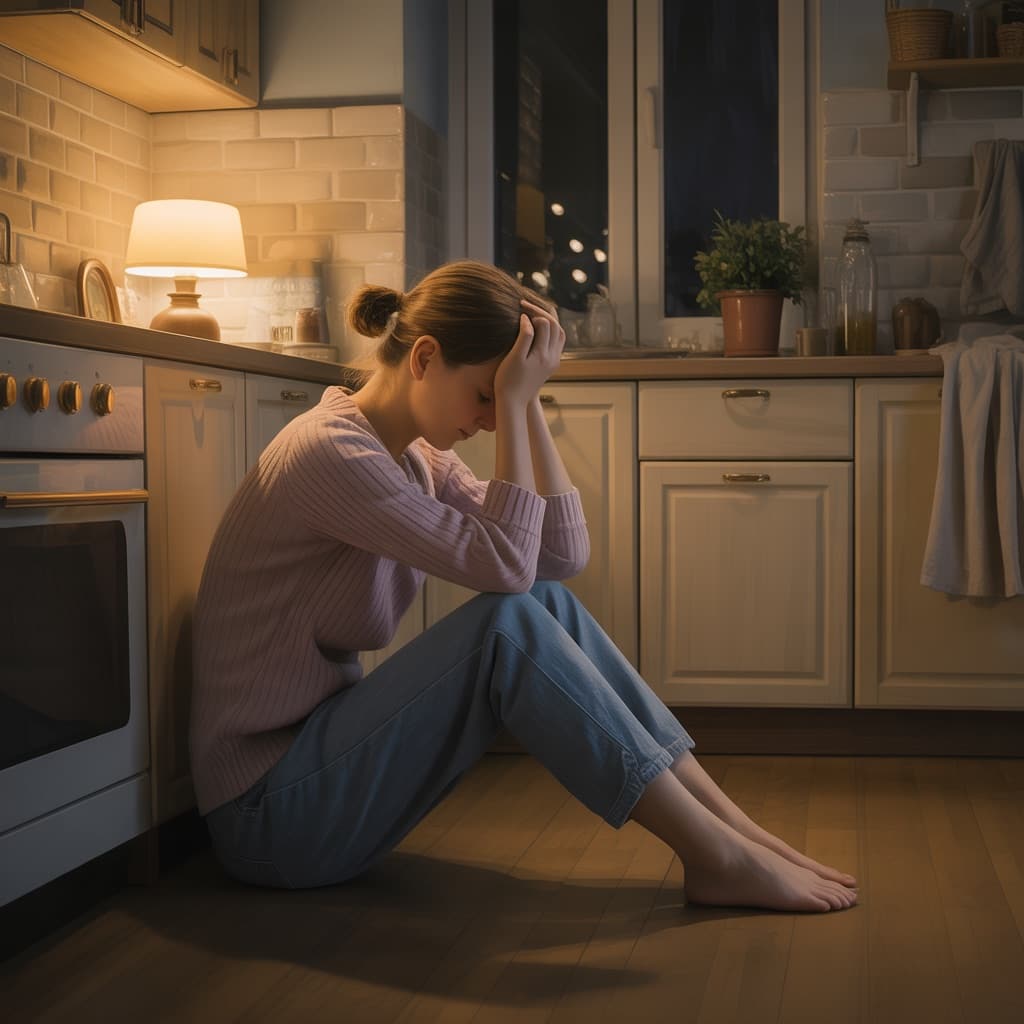
You typed something into a search bar, probably at the end of a very long day, and immediately felt guilty for even thinking it. If you’ve ever thought “I hate being a mom sometimes,” you are not broken, and you are not a bad mother. You are exhausted, human, and carrying more than most people ever see. This feeling is real, it’s widespread, and it deserves an honest conversation.
Let’s have it.
The short version
- Yes, it's normal. In one survey, 57% of parents reported burnout. You are the majority, not the exception.
- Loving your kids and enjoying the daily job of parenting are two different things.
- The feeling is usually a signal that something is depleted: rest, support, identity, or connection.
- You're not a bad mother. You're a good mother having a hard time.
Is It Normal to Hate Being a Mom Sometimes?
Yes, completely. Feeling like you hate motherhood in moments of overwhelm, exhaustion, or depletion is one of the most commonly shared and least talked-about experiences in parenting. You can love your children fiercely and still find the job of parenting brutally hard some days. Those two things are not contradictions.
You are not alone in the struggle. You are, statistically, the majority.
Nicole Goudreau-Green, LCSW-R, a therapist who specializes in working with mothers, puts it plainly: not enjoying motherhood in a given moment doesn’t mean you hate your children. It means you’re in touch with how genuinely hard it is to be responsible for another human being every single hour of every day.
Why Do I Feel Like I Hate Being a Mom?
There’s rarely one reason. It’s almost always a perfect storm. Here are the most common drivers:
You’re Running on Empty
The APA’s 2023 Stress in America report found that parents of children under 18 were nearly twice as likely as non-parents to say their daily stress is completely overwhelming (48% vs. 26%). Sleep deprivation, the constant mental load, and zero downtime don’t just make parenting feel harder. They literally impair the parts of your brain that regulate emotion and perspective. When you’re that depleted, even the smallest frustration can send you over the edge. That’s not a character flaw. That’s neuroscience.
You’re Carrying Almost Everything Alone
Motherly’s 2023 State of Motherhood survey found that 58% of moms are primarily responsible for all household duties and childcare, and 62% get less than one hour to themselves each day. When the weight isn’t shared, resentment builds. Not because you don’t love your family, but because you’re a person who also needs rest, identity, and space to breathe.
The Gap Between Expectation and Reality
Society sells motherhood as a role that will complete you: warm, glowing, effortlessly joyful. The reality involves tantrums, no sleep, lost careers, lost friendships, and a self that can feel slowly eroded. A 36-country study of over 16,000 parents found that parental burnout is driven primarily by the gap between who society tells us we should be as parents and who we actually are in our real, messy days. In individualistic Western cultures, where we’re told we should love every moment, that gap is widest. And the pain of that gap is real.
You’ve Lost Yourself
Before kids, you were a whole person with a career, friendships, hobbies, opinions, and time. Motherhood can strip that away so gradually you barely notice until one day you look in the mirror and don’t quite recognize who’s there. Grieving that version of yourself isn’t ingratitude. It’s a legitimate loss that deserves acknowledgment.
You’re Lonely in a House Full of People
Motherly’s 2025 State of Motherhood data found something striking: 7 in 10 mothers say motherhood is lonelier than they ever imagined, and 1 in 5 feel that loneliness every single day. You can be surrounded by children, needed by everyone, and still feel profoundly unseen and alone. That loneliness breeds resentment. That resentment gets named “hate.” But underneath it is just a person who needs to be seen and supported.
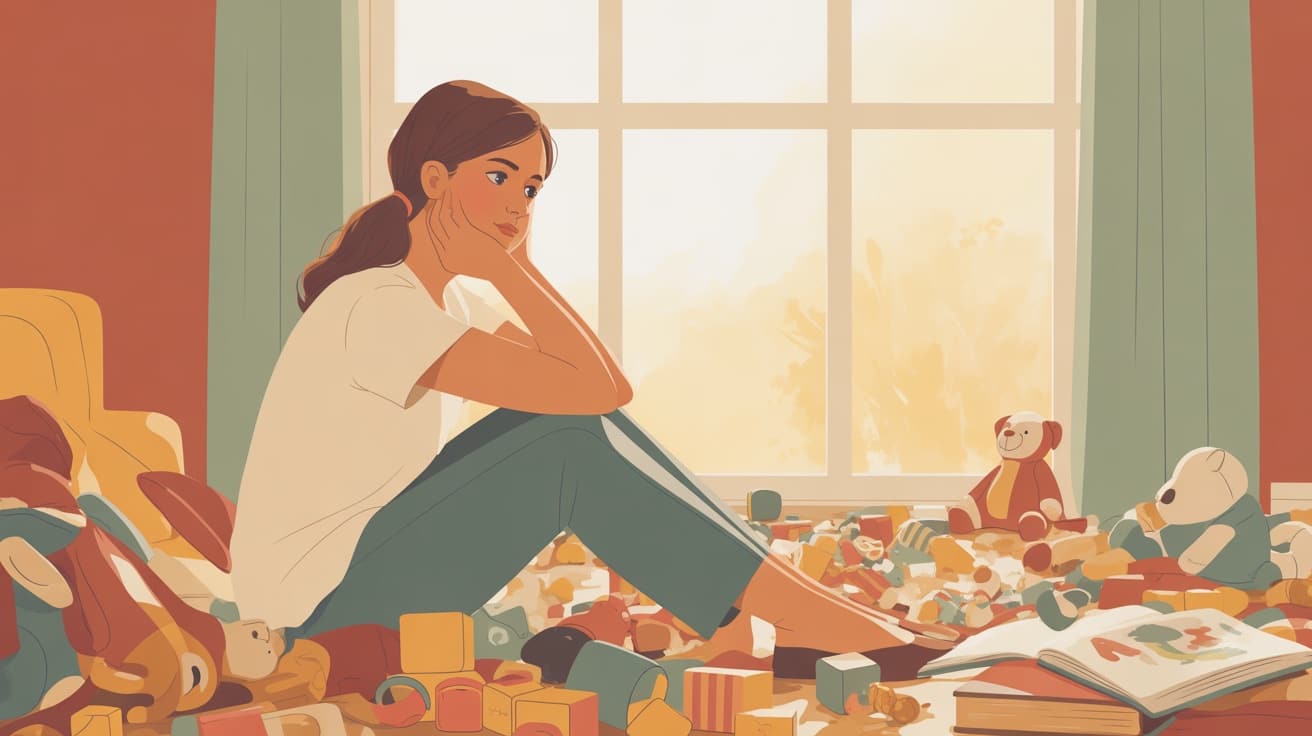
Can You Love Your Kids and Still Hate Parenting?
Absolutely. And this distinction matters more than almost anything else in this conversation. Loving your children and enjoying the daily labor of parenting are not the same thing. One is a deep, bone-level bond. The other is a job. And all jobs have hard days, tedious tasks, and moments where you’d rather be literally anywhere else.
Dr. Becky Kennedy, clinical psychologist and bestselling author of Good Inside: A Guide to Becoming the Parent You Want to Be (2022), frames parental guilt in a way that reframes everything: guilt shows up when we act against our own values. Which means if you feel guilty about a hard parenting moment, it’s actually evidence you care deeply about being a good parent. The guilt isn’t proof you’re failing. It’s proof you’re trying.
You're not a bad mother. You're a good mother having a hard time. Those are entirely different things.
Am I a Bad Mom for Feeling This Way?
No. Full stop.
Bad mothers don’t lie awake worrying about whether they’re bad mothers. The fact that you’re reading this, searching for answers, trying to understand yourself, wanting to do better, is one of the clearest signs that you care. A study published in JAMA and reported by Columbia University’s School of Public Health found that less than 26% of mothers reported excellent mental health in 2023, down from 38% in 2016. Mothers’ mental health is declining across the board, and it’s happening in a culture that expects mothers to feel nothing but gratitude.
You are not uniquely struggling. You are struggling in a system that was never designed with your wellbeing in mind.
What to Do When You Hate Being a Mom
Name it to yourself first
The shame of these feelings often makes them heavier, not lighter. Saying quietly to yourself, “I’m burnt out right now. I need support,” takes the thought from a frightening spiral to a manageable truth. You don’t have to say it out loud to anyone. Just stop pretending it isn’t true.
Look for what's actually depleted
Are you sleep-deprived? Isolated? Carrying an unfair share of the household load? Missing something that used to feed you, like a creative outlet, exercise, or uninterrupted time? When you hate parenting, there’s usually something underneath that’s crying out to be restored. The feeling is a signal, not a verdict.
Ask for help specifically
“I need help” rarely gets results. “Can you take the kids Saturday morning so I can sleep until 9am?” does. The more specific the ask, the more likely it is to actually land. You deserve to have your needs met. Asking for help is not weakness. It’s wisdom.
Lower the bar temporarily and intentionally
Perfect parenting is a myth, and chasing it is exhausting you. Dr. Becky Kennedy’s research confirms that trying to be a “perfect” parent, rather than a present, connected one, is one of the strongest predictors of burnout. What if “good enough today” was genuinely enough?
Find one person to be honest with
The therapist Nicole Goudreau-Green writes that just having one person validate these feelings can interrupt the spiral before it festers. A trusted friend, a therapist, a parenting group, an anonymous forum: somewhere to say out loud what you’ve been thinking in private. The relief can be immediate and profound.

On the heaviest days, you're still a good parent.
Daily Parent is a free iOS app built for exactly this moment: affirmations for parents who struggle with guilt, comparison, and the pressure to be perfect. A single line, like "I forgive myself for the hard days," will not fix everything. But it can interrupt the shame spiral long enough to breathe.
Download on theApp StoreWhat Are the Signs of Mom Burnout?
Parenting burnout isn’t just being tired. It’s a specific, chronic condition of exhaustion that bleeds into emotional distance and a feeling that you can no longer recognize yourself in the role. Signs include:
- Emotional exhaustion that doesn’t improve with rest
- Feeling detached or distant from your children, even when you’re in the same room
- A constant sense of inadequacy, like no matter what you do, it’s never enough
- Irritability or rage that feels disproportionate to the trigger
- Going through the motions without being emotionally present
- Dreaming of escape, fantasizing about being alone or being someone without these responsibilities
- Physical symptoms, including headaches, chronic fatigue, or getting sick more often
If several of these resonate strongly, this isn’t a mindset problem you can affirmation your way out of. It’s worth speaking with your doctor or a therapist who specializes in parental mental health.
When Does “I Hate Being a Mom” Become Something to Worry About?
Hating the hard moments of parenting is normal. But there’s a difference between a hard season and a persistent, unrelenting experience that isn’t lifting.
Frequently Asked Questions
Is it normal to not enjoy being a mom sometimes?
Yes, entirely. Research consistently shows that most parents experience periods of disliking the daily work of parenting, even while loving their children deeply. A 2023 Ohio State University survey found 57% of parents self-reported burnout. Not enjoying every moment doesn't make you ungrateful or a bad mother. It makes you honest.
Why do I feel like I hate being a parent?
The most common reasons include chronic sleep deprivation, carrying an unfair share of household responsibilities, loss of personal identity, social isolation, unrealistic societal expectations, and the gap between what parenting was supposed to feel like and what it actually feels like. These are structural and circumstantial causes, not character flaws.
Is it okay to regret having children?
Experiencing moments of regret is more common than most people admit, and it doesn't mean you don't love your children. Many parents feel glimpses of this during periods of extreme burnout or overwhelm. If the feeling is persistent and severe, speaking with a therapist can help you untangle what's underneath.
Can you love your kids and still hate parenting?
Absolutely. Love for your children and enjoyment of the parenting role are two separate things. Many devoted, deeply loving parents find parenting exhausting, tedious, and sometimes miserable, especially in certain seasons or stages. Hating the job doesn't mean you hate the people.
Is parenting burnout real?
Yes. It is recognized as a clinically distinct condition separate from job burnout and depression. Research describes parental burnout as chronic exhaustion from parenting responsibilities, emotional distance from one's children, and a sense of lost parental identity.
How do I stop resenting motherhood?
Resentment in motherhood is usually a signal that something is depleted or unfairly distributed: often rest, time, support, or identity. Rather than trying to suppress it, look at what it's pointing to. Getting specific support, lowering unrealistic expectations, and building in small pockets of restoration can shift the experience over time.
What should I do when I feel like I hate being a mom?
First, name it to yourself without shame. It's a signal, not a verdict. Then look at what's depleted: sleep, support, identity, connection? Make one specific ask for help. Find one person to be honest with. Lower the bar for good enough today. And if the feeling is persistent and overwhelming, please reach out to a mental health professional.