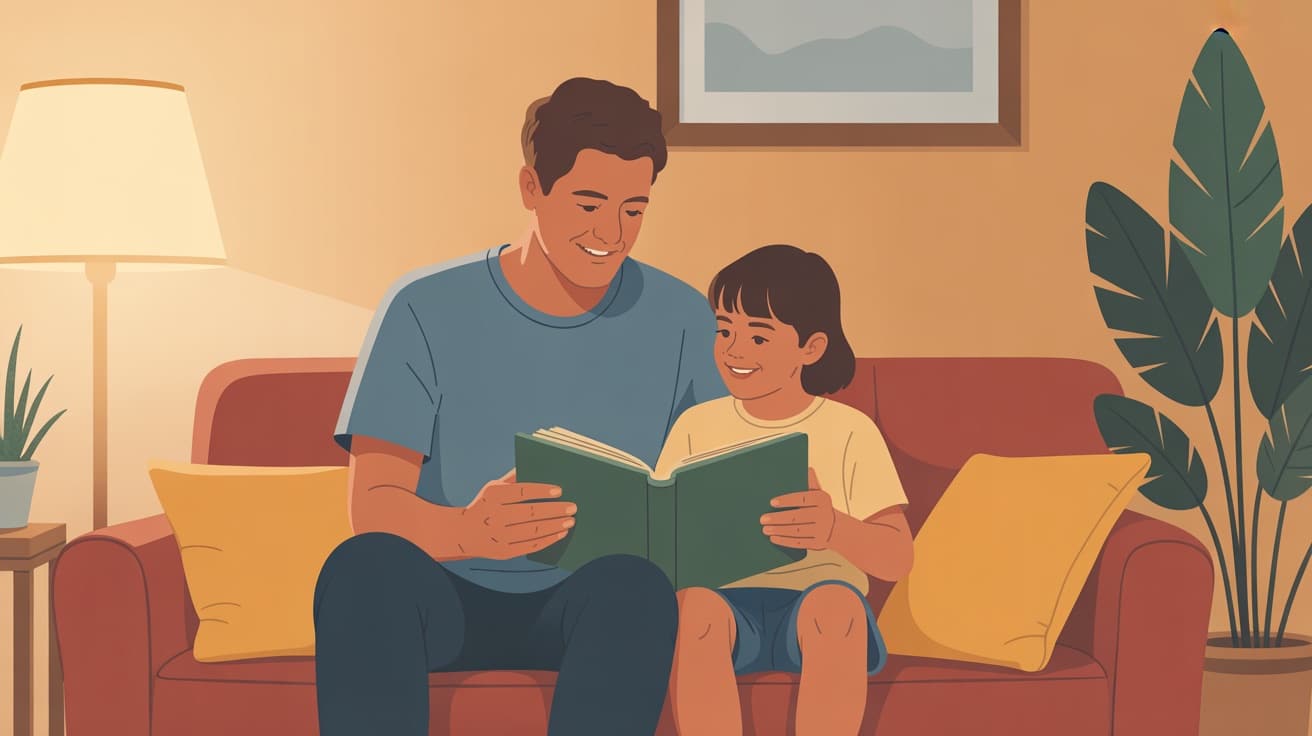
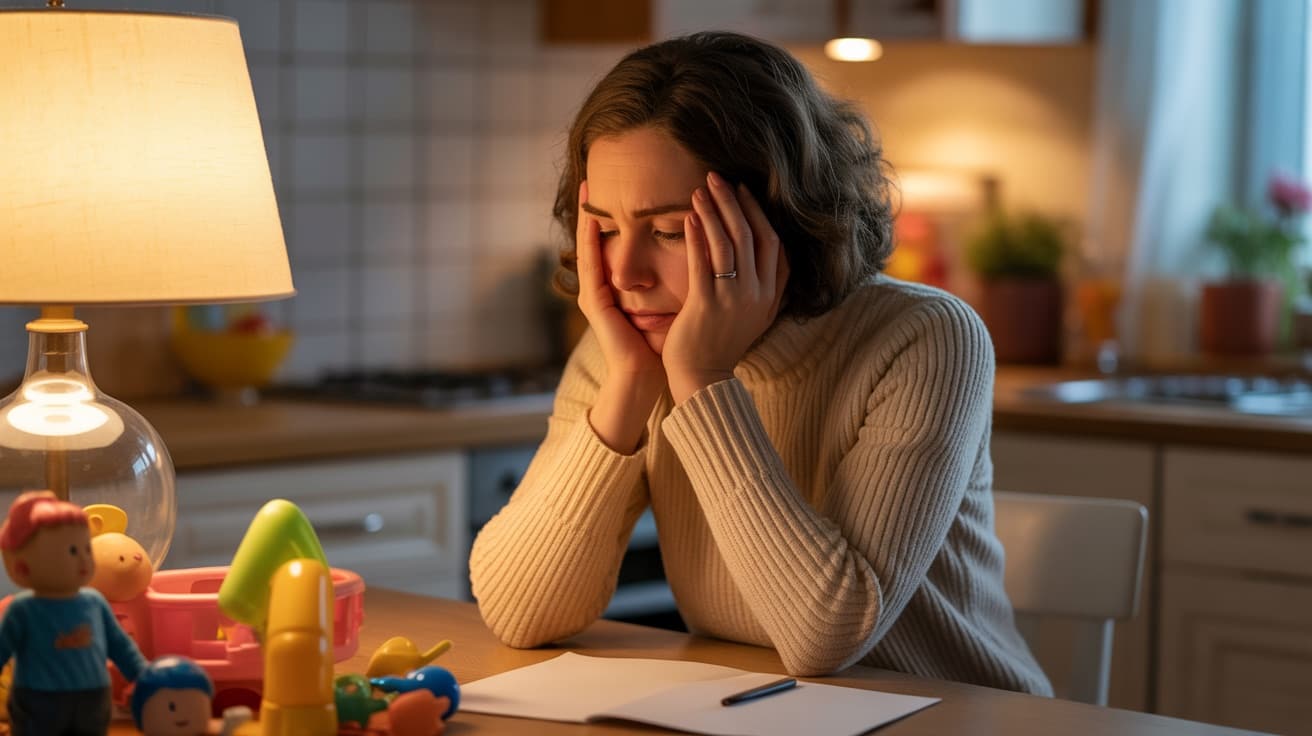
You love your kids. That’s not the question. But somewhere between the sleepless nights, the mental load, and the constant feeling that you’re not doing enough, something quietly broke. You’re snapping at your children and then hating yourself for it. You go through the motions of bedtime routines and packed lunches feeling strangely hollow. You’re exhausted in a way that sleep doesn’t fix. If any of this sounds familiar, you may be experiencing parenting burnout, and you’re far from alone.
This isn’t a personal failing. It’s a public health crisis, one the U.S. Surgeon General called an urgent public health issue in 2024. This article walks through what parenting burnout actually looks and feels like, why it happens, and most importantly, what can help.
What Is Parenting Burnout?
Parenting burnout is a state of chronic physical, emotional, and mental exhaustion caused specifically by the demands of raising children, when the stresses of parenting consistently outweigh the rewards, day after day, until there’s nothing left to give.
It’s distinct from everyday tiredness. It’s the result of long-term imbalance: too many demands, too little support, and too little recovery time. Belgian researchers Isabelle Roskam and Moïra Mikolajczak were among the first to formally define it, describing it as an exhaustion syndrome with three core components: overwhelming fatigue tied to your parenting role, emotional distancing from your children, and a growing sense of being an ineffective parent. Research identifies it as falling somewhere between stress and depression, serious enough to affect your health, your relationships, and your children’s wellbeing.
8 Signs of Parenting Burnout to Watch For
Burnout rarely announces itself. It accumulates slowly, until one ordinary Tuesday when you realize you’ve been running on fumes for months. These are the most telling signs.
1. Exhaustion That Sleep Won’t Fix
This is the hallmark of burnout rather than ordinary tiredness. You might get a full night of sleep and still wake up feeling completely depleted. The exhaustion is emotional and mental, not just physical. It’s your body’s way of signaling that it has been running a deficit for far too long. As Dr. Karen Stewart of Kaiser Permanente explains, chronic stress is the stage before parent burnout. Once a parent is burned out, it’s a different level of stress: there’s just nothing left to give.
2. Persistent Irritability, Especially at Home
One of the most painful signs: you hold it together at work, in the school pickup line, in public, and then the moment you walk through your front door, everything your child does sets you off. The smallest things ignite outsized reactions. This isn’t who you are. It’s a symptom of a nervous system that has been chronically overloaded. Psychology Today describes it as persistent irritability and anger that lasts for weeks, especially at home.
3. Emotional Numbness or Distancing From Your Children
You’re in the room. You’re going through the motions. But you can’t access the warmth you used to feel. You’re reading bedtime stories on autopilot. You love your children, you know this intellectually, but in the moment, you feel strangely disconnected, like you’re watching your own life through glass. This emotional distancing is not a character flaw. It’s a protective mechanism a depleted nervous system uses when it has nothing left. But it’s also a significant red flag that needs attention.
4. Feeling Like You’ve Lost Yourself
Before children, you had hobbies, friendships, and a sense of who you were. Now your entire identity feels like it has collapsed into “parent.” You can’t remember the last time you thought about what you wanted. You feel like you’ve disappeared. This loss of self is deeply connected to burnout, and it makes recovery harder, because it’s difficult to refuel an identity that no longer exists outside of caregiving.
5. The Shame Spiral: Snapping, Then Drowning in Guilt
You snap at your kids. You feel terrible. The shame tells you that good parents don’t lose it, so you double down: try to be more patient, more present, more perfect. But you’re running on empty, so the next snap comes sooner. The guilt and shame, counterintuitively, make burnout worse. They deplete you further while convincing you to abandon the self-care that might actually help. Dr. Becky Kennedy, Good Inside (2022) captures this: the internal story that something is wrong with you as a parent is itself part of what keeps the cycle going.
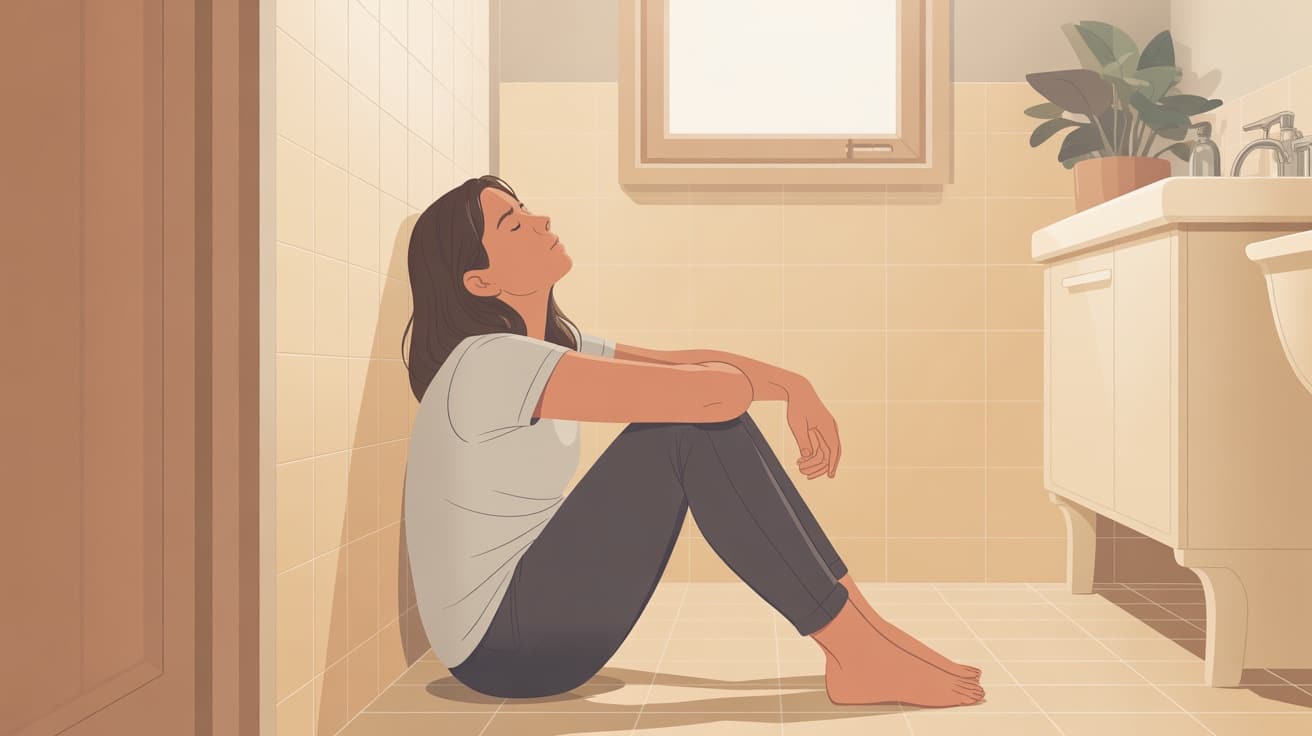
6. Physical Symptoms You’re Dismissing
Burnout lives in the body. Frequent headaches, muscle tension, getting sick more often than usual, digestive issues, disrupted sleep or struggling to fall asleep despite exhaustion, changes in appetite: these are your body’s distress signals. As one Kaiser Permanente physician puts it, there may not be a part of the body that parental burnout cannot affect.
7. Social Withdrawal and Increasing Isolation
You used to see friends. Now the thought of getting together with anyone outside your immediate family feels like too much. You cancel plans. You don’t reach out. You scroll Instagram at 11pm instead of texting the friend you’ve been meaning to call for three months. Isolation both signals and worsens burnout, cutting off one of the key recovery resources at precisely the moment you need it most.
8. Escape Ideation, Fantasizing About Disappearing
This one parents rarely admit out loud: fantasizing about just leaving. Getting in the car and driving somewhere. Checking into a hotel alone. Not coming back for a week. This is not a sign that you’re a bad parent or that you don’t love your children. It is, however, one of the more serious warning signs of significant burnout, signaling that your brain is in genuine crisis mode. If these thoughts feel persistent or disturbing, please reach out to your doctor or a mental health professional.
What Causes Parenting Burnout?
At its core, parenting burnout happens when the demands of the role consistently exceed the resources available to meet them. But there are specific accelerants worth understanding.
The “perfect parent” trap. Social media has made the impossible feel like the baseline. Research from Ohio State University found parental burnout is strongly associated with perceived judgment from others and internal standards around being a good parent. Roughly 1 in 3 parents report that parenting is stressful most of the time, according to a 2023 Pew Research survey, a rate that climbs when parents feel they’re falling short of an impossible standard.
The invisible mental load. Research tracking 3,000 American parents found that moms carry 71% of the mental load tasks: meal planning, school logistics, emotional management, appointment scheduling. The constant background hum of managing a family is a major driver of burnout that rarely gets acknowledged.
Lack of support. Individualistic cultures like the U.S. show significantly higher rates of parental burnout than collectivist cultures with stronger extended family and community networks, according to a landmark 42-country study published in Affective Science. Parenting was never meant to be done alone.
Children with higher support needs. Parents of children with ADHD, autism, chronic illness, or behavioral challenges face significantly elevated burnout risk, not because they love their children less, but because the daily demands are objectively more intense.
Is It Burnout or Depression? How to Tell the Difference
Parental burnout and depression share overlapping symptoms: exhaustion, numbness, withdrawal. But there are meaningful differences. With burnout, the low mood and exhaustion are primarily tied to the parenting role. When you’re away from parenting demands, rare as that is, you may feel more like yourself. With depression, the low mood tends to color all areas of life. Burnout also typically develops in response to chronic role-related stress, rather than emerging independently. That said, untreated burnout can develop into depression, which is another reason not to white-knuckle it.
If you’re unsure, your GP or a mental health professional can help distinguish between them and point you toward the right support.
A softer thought can be the first small opening.
Daily Parent is a free iOS app built for moments like this: short, honest affirmations for parents who are hard on themselves, organized by what you're actually struggling with, including guilt, comparison, confidence, and exhaustion.
Download on theApp StoreHow to Recover From Parenting Burnout
Recovery isn’t a weekend off, though rest helps. It requires addressing the actual imbalance: reducing demands where possible, and actively rebuilding resources. Here’s what the evidence supports.
Name it without shame
Identifying burnout is the first step toward changing it. The stigma around admitting you’re struggling is itself a barrier to recovery. Externalizing the problem, this is burnout, not a character flaw, allows you to address it.
Practice self-compassion seriously
Research published in PMC found that mindfulness- and self-compassion-based programs significantly reduced parental burnout, including parental neglect and harsh parenting behaviors. Self-compassion isn’t self-indulgence. It’s one of the most evidence-backed internal resources for burnout recovery.
Redistribute the mental load
If you have a partner, a concrete conversation about who carries what is not a luxury. It’s a survival strategy. If you’re a single parent, identifying even one area where you can ask for help, such as childcare swaps, meal support, or ride-sharing with another parent, can reduce the pressure meaningfully.
Protect small pockets of recovery time
You cannot pour from an empty cup. Even 15 minutes of uninterrupted time that belongs to you, a walk, a cup of coffee in silence, an adult conversation, adds up. You can validate your child’s feelings while still holding a boundary around recovery time.
Seek professional support when needed
If burnout has escalated to persistent hopelessness, escape ideation, or concern about your relationship with your children, please reach out to your GP or a licensed therapist. The National Alliance on Mental Illness has resources for parents, including a helpline at 1-800-950-NAMI. You don’t have to be in crisis to deserve support.

Can Parental Burnout Affect Your Kids?
This is the question many burned-out parents most fear asking. The honest answer: yes, chronic burnout left unaddressed can affect children. That is one reason it matters so much to take it seriously, not as a self-indulgence, but as a family health issue.
Research shows burned-out parents are more likely to engage in harsh parenting behaviors, including yelling and criticism, and less able to access the warmth and emotional attunement that children need for secure attachment. The Ohio State University study found that parents who reported burnout were also more likely to report their children as being unhappy, anxious, and hard on themselves.
But here’s the reframe: seeking help for burnout is one of the most loving things you can do for your children. Modeling self-care, self-compassion, and asking for help teaches children those skills too. Recovery is not selfish. It’s generational.
Frequently Asked Questions
What are the main signs of parenting burnout?
The main signs include persistent exhaustion that sleep doesn't resolve, increased irritability, emotional distancing or numbness toward your children, a loss of your identity outside of parenting, physical symptoms like headaches and frequent illness, social withdrawal, and fantasizing about escaping your life. Burnout develops gradually, so early recognition makes recovery much easier.
How do I know if I have parental burnout?
Ask yourself: Am I exhausted in a way that rest doesn't fix? Do I feel more like I'm managing my children than connecting with them? Have I lost interest in things outside of parenting? Do I frequently feel trapped or resentful? If several of these ring true and have persisted for weeks or months, burnout is likely what you're experiencing.
What does parental burnout feel like?
Many parents describe it as going through the motions on autopilot, being physically present with their children while feeling emotionally somewhere else entirely. Others describe a bone-deep fatigue that sleep doesn't touch, a constant low-grade irritability, and a hollow sense of not enjoying their family even though they love them.
Is parental burnout the same as depression?
They share symptoms but are distinct. Parental burnout is primarily tied to the parenting role, while depression tends to be more pervasive. That said, untreated burnout can progress into clinical depression, making early intervention important. A mental health professional can help distinguish between them.
How long does parental burnout last?
Without intervention, parental burnout can persist indefinitely because the demands that caused it don't go away on their own. With active recovery strategies, most parents begin to feel meaningfully better within weeks to months. Severity and circumstances vary.
What causes parenting burnout?
Burnout is caused by a sustained imbalance between parenting demands and available resources, including time, energy, support, and self-care. Key contributors include the pressure to be a perfect parent, carrying the majority of the mental load, lack of support networks, work-life conflict, and parenting children with higher support needs.
Can parental burnout affect my children?
Research shows that sustained parental burnout can affect children because burned-out parents show higher rates of harsh or disengaged parenting behaviors. This is not a reason for more guilt, but it is a reason to take burnout seriously as a family health matter.
Am I a bad parent or just burned out?
Burnout. Bad parents don't lose sleep worrying about whether they're bad parents. The very fact that you're reading this and examining your behavior is evidence of how much you care. Burnout is what happens to deeply loving parents who have been running on empty for too long without enough support.