
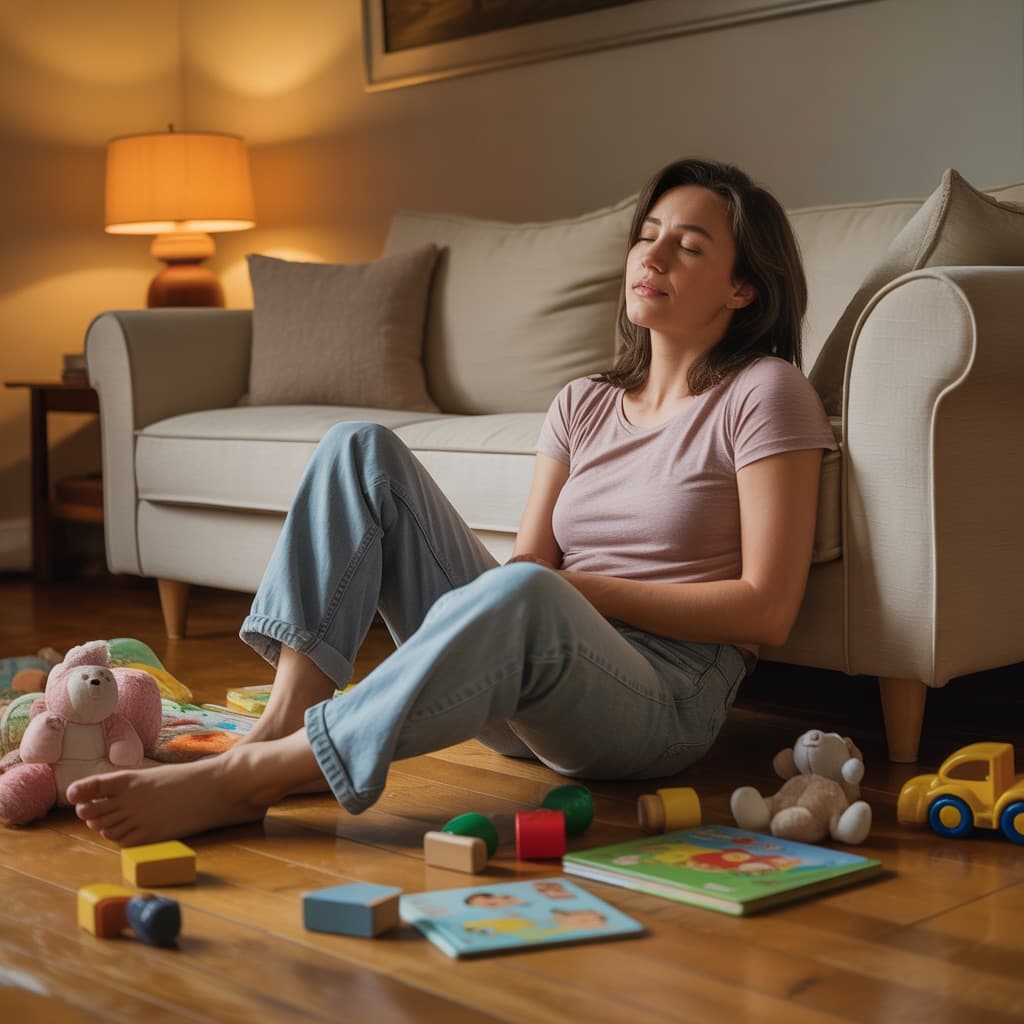
If you’ve found yourself Googling “why is parenting so hard” at 11pm while the laundry sits unfolded on the bed and tomorrow’s packed lunch is still a thought rather than a reality, this article is for you. Not the you who had everything figured out before kids. The real you. The one who loves your children fiercely and is still genuinely baffled by how relentless this is.
You’re not alone, and you’re not failing. What you’re experiencing has a name, a cause, and a growing body of research behind it. The U.S. Surgeon General issued an unprecedented public health advisory in August 2024 specifically about parental stress and mental health, the first time in American history that parenting exhaustion has been treated as a national public health concern.
Is Parenting Supposed to Be This Hard?
Yes, and also, it has genuinely gotten harder. According to a Pew Research Center survey, 62% of U.S. parents say parenting has been harder than they expected, with 26% saying it has been a lot harder. That means you’re in the majority. The parents who find this easy are the outliers.
Parenting has always carried weight: the love, the worry, the bone-deep responsibility of another human’s life. But something has shifted in recent decades. A full 70% of parents now believe parenting is more difficult than it was 20 years ago, and the reasons are not imaginary. They are structural, cultural, and deeply personal all at once.
Understanding why this is so hard is not about making excuses. It is about seeing the actual shape of what you’re dealing with, so you can stop blaming yourself for a job that was always going to take everything you had.
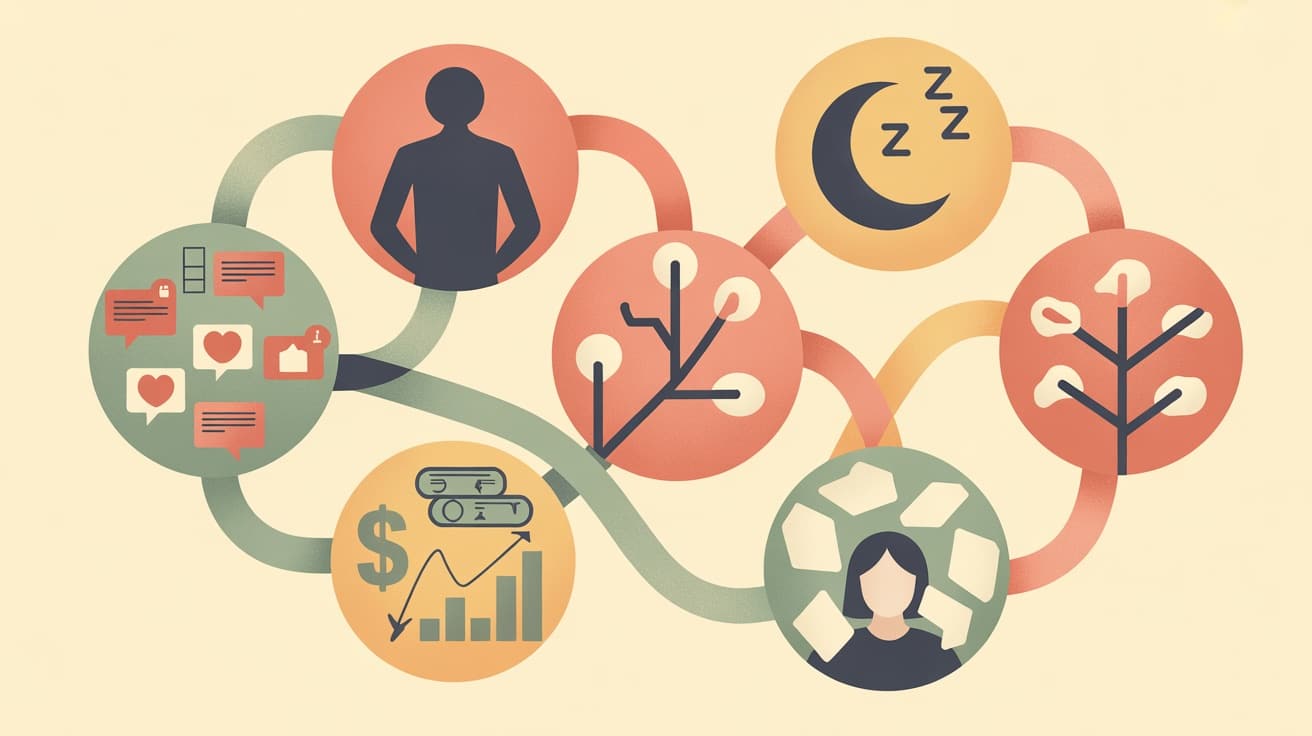
You Were Given an Impossible Job Without a Manual
Think about every significant responsibility in your life. Your job came with training, a manager, performance reviews, and the ability to clock out. Even driving a car required you to study and pass a test. But parenthood? You were handed a small human being, the most complex and vulnerable creature you’ll ever be responsible for, and sent home. No syllabus. No certification. No feedback loop that does not involve a meltdown at the grocery store.
Clinical psychologist Dr. Becky Kennedy captures this precisely in Good Inside: A Guide to Becoming the Parent You Want to Be: parenting in a way that feels in line with your values is a skill, and skills have to be learned. The fact that you’re struggling does not mean you lack instinct. It means you’re doing something genuinely difficult without adequate preparation, support, or rest.
What makes this especially cruel is that many parents had previously mastered their professional lives, their independence, and their routines, only to feel suddenly incompetent at the most important job they had ever had. Parents often describe this as “not recognizing myself anymore” or “I used to be good at things.” That disorientation is real. It is grief, in a sense, for a former, more competent-feeling version of yourself.
Why Is Modern Parenting So Overwhelming?
The short answer: you are being asked to do far more, with far less support, while being watched by far more people.
Previous generations of parents operated within a clearer, narrower definition of “good parenting.” You kept your children fed, safe, and in school. Today, you’re navigating an ever-expanding landscape of competing philosophies: gentle parenting, authoritative parenting, conscious parenting, attachment parenting, and free-range parenting. Every approach comes with its own advocates, its own research, and its own implicit critique of what you’re doing wrong.
The cognitive load of simply choosing how to parent, let alone actually doing it, is exhausting in a way that has very little precedent. Modern parents are expected to make intentional decisions about food, screen time, sports, education, emotional regulation, sleep schedules, and social development simultaneously, relentlessly, and often in public.
The Village Is Gone. And No, Your Phone Can’t Replace It.
For most of human history, raising children was a communal act. Extended family, neighbors, and community members all played active roles in caring for children. Parents did not do this alone because alone was never how it was meant to be done.
The modern reality is almost the exact opposite. Families are smaller and more geographically dispersed. Neighborhoods are less connected. The village that previous generations relied on has largely been replaced by social media, which provides the illusion of community while delivering an audience for your parenting choices and a highlight reel of everyone else’s success.
The Surgeon General’s advisory specifically called out isolation and loneliness as one of the six key drivers of parental stress, noting that single parents face this most acutely, with more than three-quarters of single parents reporting significant loneliness. But partnered parents are not immune. Having a co-parent does not automatically mean having support. Two exhausted people are not the same as a village.
The Stress Is Real. The Numbers Are Alarming.
Here’s what the data actually says about how parents are doing, and it should make you feel less alone, not more alarmed.
According to the American Psychological Association’s 2023 Stress in America survey, 1 in 3 parents report being highly stressed, compared to just 20% of the general adult population. More strikingly, 41% of parents say most days they are so stressed they cannot function, and 48% say their stress is completely overwhelming most days.
The Surgeon General’s advisory describes parents working more hours than in any previous generation while simultaneously spending more hours on hands-on childcare, with the difference coming directly from sleep, leisure, and time with a partner.
This is not sustainable. And the Surgeon General agrees: the 2024 advisory called for a national cultural shift in how we value and support parents, including paid family leave, affordable childcare, and open dialogue about parental mental health. The formal acknowledgment that this is a systemic problem, not a personal failing, matters. You are not behind. The system is.
Why You Feel Like You’re Failing (Even When You’re Not)
One of the cruelest features of modern parenting is the comparison trap, and it has been turbocharged by social media. You are raising your children in real life, chaotic, messy, exhausting real life, while being bombarded with curated images of other families who appear to be doing it better, calmer, more joyfully, and with better snacks.
What you see on Instagram is a flattened version of someone else’s life. You see the Christmas activities; you do not see the meltdown on the way home. You see the waffle breakfast; you do not see that it was the only thing that went right all week. But your brain, wired for social comparison as a survival mechanism, does not automatically make that distinction. It just registers: they are doing better than me.
The result is a kind of parenting guilt that operates independently of your actual behavior. You can be a warm, present, genuinely loving parent and still feel, on a daily basis, like you’re falling short. That guilt is not a signal that you’re failing. It is a signal that you care, and that you’ve been given an impossible benchmark.
Parenting researcher Cynthia Catchings, Ph.D., LCSW, puts it this way: guilt often arises for parents precisely because they care deeply about their children’s wellbeing. The guilt is not the problem. What we do with it is.
You deserve a kinder voice in your head.
Daily Parent is a free iOS app built for moments like this: science-backed affirmations designed to help parents deal with guilt, comparison, and the particular kind of exhaustion that comes from pouring yourself into the hardest job there is.
Download on theApp StoreParenting Triggers Something Deeper in You
There’s another layer to why parenting is hard that rarely gets named: your children do not just push your buttons. They often bring you back to who you were, in your hardest moments, as a child yourself.
When your toddler’s defiance sends you into a rage that surprises you, or your child’s sadness makes you shut down rather than lean in, something older than this moment is usually at play. Our children can surface unresolved emotions from our own childhoods: fears about adequacy, old wounds around love and safety, and patterns we swore we would break. This is not weakness. It is neuroscience. And it means that parenting is, in part, a process of parenting yourself.
This is why the work is never just about the children. As Dr. Becky Kennedy writes, self-development and child development go hand in hand. The parent who is harshest on themselves is often the one whose own inner child never felt like enough. Recognizing that connection does not fix it overnight, but it changes what you’re working on.
Does It Get Easier?
Honestly? Different, rather than easier. Pew Research data shows that parents of children under 5 report significantly higher levels of exhaustion and stress than those with older children: 57% of parents with children under 5 say parenting is tiring all or most of the time, compared to 24% of parents with teenagers. The physical relentlessness eases. The emotional complexity evolves.
What parents consistently report is that the early years feel impossible in their physical demands, and the later years feel impossible in their emotional ones. There is no stage that is simply easy. But there are stages that are different-hard, and sometimes, the accumulation of experience and self-knowledge makes the hard feel more manageable, even when it does not get smaller.
What You Actually Need Right Now
Not a longer to-do list. Not another philosophy to implement. What actually helps, according to both the research and the parents who’ve been where you are, is much simpler.
Permission to find this hard
You are not weak for struggling. You are not a bad parent for being exhausted. You are a person doing an enormous job in a culture that undervalues it, with less community support than your parents had, under more scrutiny than any previous generation. Finding it hard is the appropriate response.
Connection over comparison
The most protective thing you can do for your mental health as a parent is not an optimized morning routine. It is genuine connection: with other parents who tell the truth about their experience, with a partner or friend who sees the whole picture, and with yourself.
Self-compassion as a practice
Self-compassion is not a feeling you wait to arrive. It is a deliberate, daily habit. It means speaking to yourself the way you would speak to a good friend who was struggling, and interrupting the inner critic before it gets to narrate your whole day.

You Are a Good Parent Having a Hard Time
There is a difference between being a bad parent and being a good parent in hard circumstances. Most of the parents reading this are the latter: people who care so much it hurts, who are still showing up even when they’re running on nothing, who are asking the question in the first place.
The fact that you’re asking “why is parenting so hard” means you’re paying attention. It means the gap between where you are and where you want to be matters to you. That gap is not evidence of failure. It is evidence of love.
Parenting is hard because it asks everything of you: your patience, your history, your identity, your sleep, and your sense of self. Not because you’re doing it wrong. Because it is one of the biggest things any human being does.
Frequently Asked Questions
Why is parenting so much harder now than it used to be?
Modern parenting involves more hours of work and more hands-on childcare than previous generations, with less community support and more competing information than ever before. A 2024 U.S. Surgeon General's advisory identified six key drivers of elevated parental stress today: finances, time demands, children's health concerns, isolation and loneliness, technology and social media, and cultural pressures around perfect parenting. The village that once shared this work has largely disappeared, while the standards for what good parenting means have expanded dramatically.
Is parenting supposed to be this hard?
Yes, though acknowledging that does not make it easier. Research consistently shows that parenting is one of the most demanding roles humans take on, and that the gap between what parents imagined and what parenting actually feels like can contribute to real distress. Pew Research found that 62% of parents say parenting has been harder than expected. The hardness is not a sign that you are doing it wrong.
Why do I find parenting so exhausting?
Because it is genuinely exhausting. Parenting is physically demanding, emotionally complex, cognitively taxing, and never fully off. The 2024 Surgeon General's advisory noted that today's parents work more hours than in 1985 while also spending more hours on primary child care, with the deficit coming from sleep, leisure, and relationship time. Add the mental load of schedules, decisions, and children's emotional needs, and exhaustion is the natural result.
What is the hardest part of being a parent?
This varies by person and life stage, but the most commonly reported challenges are the relentlessness, the emotional labor of managing both a child's big feelings and your own, the loss of personal identity, parenting guilt, social comparison, and the isolation of doing this without adequate community support. Many parents also find that children surface unresolved emotional patterns from their own childhoods.
Why is modern parenting so overwhelming?
Several forces converge at once: intensive parenting culture, information overload, conflicting expert advice, social media comparison, financial pressure, and the collapse of informal community support systems. Research from the American Psychological Association found that 1 in 3 parents is highly stressed, significantly more than the general adult population, which suggests this is not just a personal problem but a structural one.
Does parenting get easier?
The nature of the difficulty shifts rather than disappearing. Parents of children under 5 often report the highest levels of physical exhaustion, while parents of teenagers may describe the emotional complexity as a different kind of hard. Pew Research data shows that 57% of parents with children under 5 find parenting tiring all or most of the time, compared to 24% of parents with teenagers. Most experienced parents also report that their emotional skills and self-knowledge grow with time.
Why do I feel like a bad parent?
Parenting guilt is almost universal. Psychologists point to high expectations, cultural perfectionism, social media comparison, the emotional weight of caring deeply about another person's wellbeing, and unresolved patterns from our own upbringing. Parents who feel like failures are often deeply invested in doing well. The guilt is usually a product of caring, not evidence of inadequacy. If guilt is constant and overwhelming, speaking with a therapist can help.
Is parenting harder for moms than dads?
Data consistently shows that mothers carry a disproportionate share of the mental, emotional, and physical labor of parenting. Pew Research found that 47% of mothers say parenting is tiring all or most of the time, compared to 34% of fathers. Mothers are also more likely to report feeling judged, worried, and overwhelmed. The gap reflects broader cultural expectations and the unequal distribution of the invisible mental load of family management.