

If parenting feels too hard right now, that is not a character flaw. It is not a sign you chose the wrong life or that you love your children any less. According to a 2024 advisory from the U.S. Surgeon General, nearly half of all American parents say that most days their stress feels completely overwhelming. That is not a personal crisis. That is a public health crisis.
So if you are hanging by a thread today, running on empty, wondering how you are going to make it through until bedtime, you are in company with millions of other parents who would never guess, looking at each other, that anyone else felt this way.
This article is for those days. The ones where you close the bathroom door and breathe for thirty seconds and call it self-care. Let’s talk about what is actually happening, why it happens, and how to genuinely cope, not just white-knuckle through.
Is It Normal to Feel Overwhelmed by Parenting?
Yes. Completely and unreservedly. Feeling overwhelmed by parenting is one of the most universal human experiences, even if it rarely makes its way into polite conversation.
Among working parents specifically, that number climbs to 65%, according to research published in the Journal of Pediatric Health Care.
The problem is not that parenting is hard. Parenting has always been hard. The problem is that modern culture surrounds us with images of parents who appear to manage it effortlessly, while saying nothing about the anxiety, guilt, loneliness, and depletion happening behind closed doors. You are not falling behind. You are in the middle of something genuinely difficult, and the gap between how parenting looks and how it feels is not a reflection of your capability.
What Is Parental Burnout and How Do You Know If You Have It?
Parental burnout is more than a bad week. It is a state of chronic physical and emotional exhaustion caused by the relentless demands of caregiving, without enough recovery time or support in between. Research published in 2019 characterized it as a syndrome involving feeling overwhelmed, emotional exhaustion, emotional distancing from one’s children, and a sense of being an ineffective parent.
Common signs include:
- Feeling depleted even after rest. The tiredness goes deeper than sleep can fix.
- Going through the motions of parenting without emotional presence.
- Dreading interactions with your own children, then feeling crushing guilt about it.
- Irritability, short fuse, or emotional numbness that feels out of character.
- Feeling like you are failing your kids even when you are doing your best.
- A growing sense of loneliness, like no one really sees how much you are carrying.
If any of those land hard, that awareness is important. Burnout is not a permanent state, but it does need attention, not a longer to-do list.

Why Does Parenting Feel So Much Harder Than It Used To?
It is not your imagination, and it is not weakness. The Surgeon General’s 2024 advisory described how today’s parents work significantly more hours than parents did in 1985 and spend more hours per week on direct childcare than previous generations. The result is that something had to give: sleep, leisure time, time with partners, time to simply be a person. According to the advisory, nearly 70% of parents say parenting is harder now than it was 20 years ago.
Add to this the hyper-connected culture of social media comparison, the absence of extended family support that previous generations relied on, financial pressures, and the invisible mental load of managing everything, and the picture becomes clear. This is not a personal failing. It is a structural weight being carried largely without systemic support.
As clinical psychologist Dr. Becky Kennedy writes in Good Inside: A Guide to Becoming the Parent You Want to Be, the pressure to always be calm, consistent, and emotionally available as a parent runs directly counter to the actual experience of being human. Her go-to mantra for hard moments is simple and research-aligned: “Parenting feels hard because it is hard.”
How Do You Cope When Parenting Feels Impossible?
There is no single fix, but there are evidence-based approaches that genuinely move the needle. They do not make parenting easy. They make you more able to withstand the hard without losing yourself inside it.
Name what you are feeling without judgment
The first step is not finding a solution. It is naming the state you are in. Parents often notice they are overwhelmed only at the point of explosion: the yell, the tears, the shutdown. Starting earlier, by asking “What am I actually feeling right now?”, gives you information to work with. Frustration, grief, loneliness, and helplessness are not weaknesses. They are signals.
Replace self-criticism with self-compassion
Research by Dr. Kristin Neff at the University of Texas has found that self-compassion, not self-criticism, helps people recover from difficult moments and respond better in the future. When the inner critic fires up, pause and ask: Would I say this to a friend in my exact situation? If not, try what you would say to them instead.
Reduce the pressure to be a perfect parent
Perfectionism is one of the strongest predictors of parental burnout, according to the Ohio State research team. Good parenting does not mean always being patient, always having the right answer, or always showing up calmly. Kids do not need perfect parents. They need parents who repair.
Stop carrying this alone
Loneliness is one of parenting’s least-discussed dimensions. Finding one person, a friend, a partner, a parenting group, or an honest online community, to say “this stage is really hard” to is not a small thing. It interrupts the isolation loop.
Address your physical foundation
Emotional resilience is harder to access when you are depleted, sleep-deprived, and running on caffeine and urgency. Start with the small things that are actually possible: a full meal without multitasking, five minutes outside, or rest when there is any opportunity.
Lower the bar without lowering your love
You do not have to do all the activities, maintain a spotless house, make a perfect dinner, and be emotionally present for every exchange in the same day. Choosing what to let go of in a specific season is not laziness. It is triage.
Build small daily habits that remind you who you are
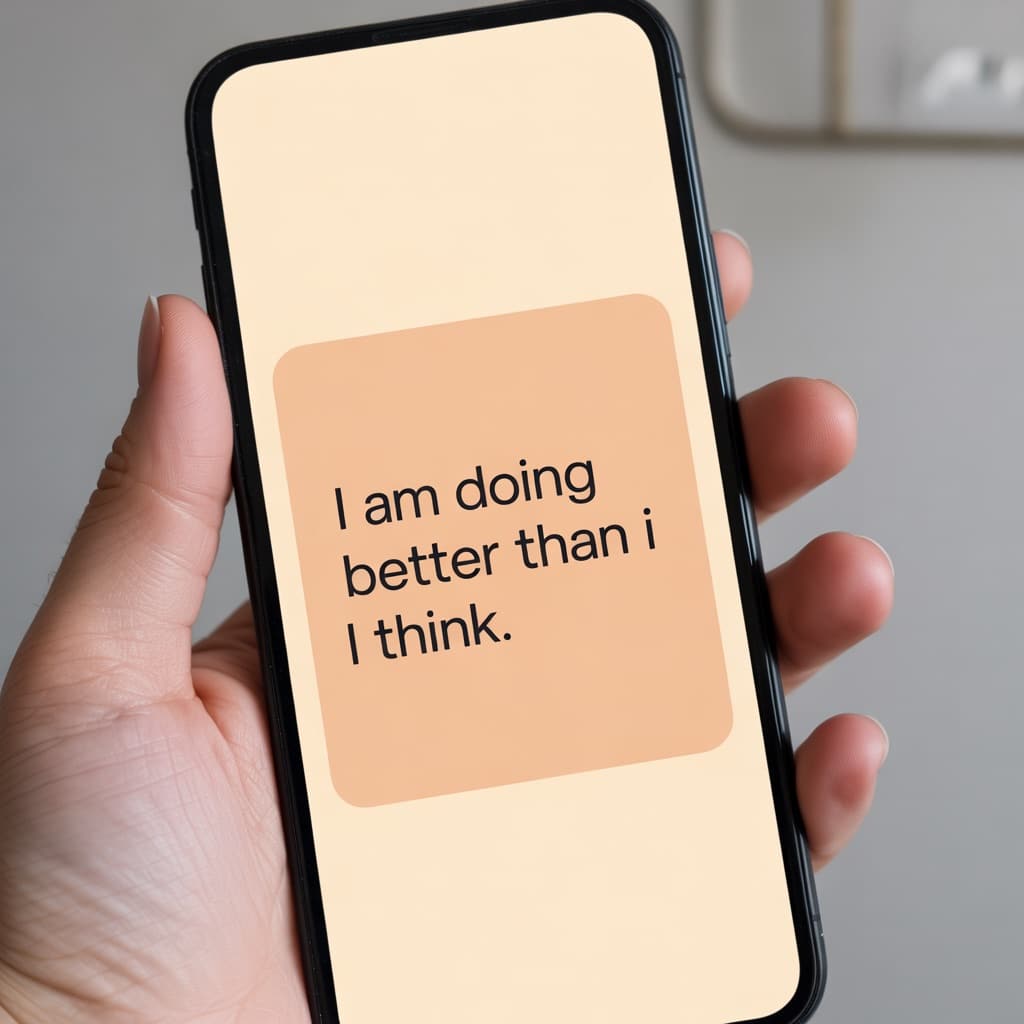
When parenting feels too hard, it can come with the deeper grief of feeling like you have lost yourself inside the role. Five minutes of stillness, one sentence of journaling, or an affirmation that meets you where you actually are can help you stay connected to the person your children need: you, not a performance of a perfect parent.
You deserve the same words you would offer someone you love.
Daily Parent is a free iOS app built for moments when your inner voice has become your harshest critic. It offers affirmations designed for parenting guilt, comparison, emotional exhaustion, and the days when you feel like you are failing.
Download on theApp Store
What to Do When You Feel Like You Can’t Be a Good Parent
First: the fact that you are worried about whether you are a good parent is itself meaningful. Parents who are genuinely indifferent to their children’s wellbeing do not typically search for how to cope with parenting guilt.
The moment that feels like evidence you are failing, the yell, the shutdown, the day you handed them a screen and went to cry in the other room, is not the whole picture of who you are as a parent. It is one data point in a much longer story that includes every time you showed up, every time you tried again, every time you chose to come back after a hard moment and repair.
You do not have to earn the right to feel okay about yourself as a parent. You already are one. The hard moments are part of it, not proof that you are the wrong person for it.
When to Seek Professional Help
Coping strategies matter, but there are moments when parenting overwhelm exceeds what strategies alone can address. Consider reaching out to a therapist, counselor, or your primary care doctor if:
- You feel persistently hopeless, numb, or unable to experience warmth toward your children.
- You are using alcohol, substances, or other behaviors to manage the weight of parenting.
- You are having thoughts of harming yourself or someone else.
- The overwhelm has persisted for weeks without relief despite trying to address it.
- You are experiencing symptoms of postpartum depression or anxiety, which can emerge well past the newborn period.
Frequently Asked Questions
Is it normal to feel overwhelmed by parenting?
Yes, completely. Research from the U.S. Surgeon General's 2024 advisory found that 48% of parents say their stress is completely overwhelming on most days, more than twice the rate reported by non-parents. Feeling overwhelmed by parenting is one of the most common human experiences, even though it is rarely discussed openly.
What is parental burnout and how do you know if you have it?
Parental burnout is a state of chronic physical and emotional exhaustion caused by the sustained demands of caregiving without adequate recovery or support. Signs include feeling depleted even after rest, going through the motions without emotional presence, dreading interactions with your children, persistent irritability or numbness, and a deep sense of loneliness.
How do you cope when parenting feels impossible?
Start with what is most accessible: name how you feel without judgment, interrupt the self-critical loop with a more compassionate inner voice, and reach out to at least one person who can hold some of the emotional weight with you. From there, lower the bar on what a good parenting day has to involve, and prioritize the basics of sleep, food, and a few minutes of stillness.
How do I stop feeling like a bad parent?
Recognize that feeling like a bad parent and being one are very different things. The parents most likely to worry about whether they are doing enough tend to be the ones who care most. A useful reframe is: I am a good parent having a hard time. The hard moment is not your identity; it is one moment in a much longer relationship.
Why does parenting feel so much harder than it used to?
Today's parents work more hours and provide more direct childcare than previous generations, often without more support to compensate. Extended family networks have eroded, social media creates relentless comparison, and the cultural expectation that a good parent should manage all of it with patience and presence makes struggling feel personal instead of structural.
What are the signs of parental burnout?
Key signs include chronic exhaustion that sleep does not resolve, emotional detachment from your children, a persistent sense that you are failing, heightened irritability or emotional numbness, and significant loneliness even in a full household. Burnout tends to develop gradually and can be addressed with support, reduced pressure, and intentional recovery.
When should a struggling parent seek professional help?
Seek support if you are experiencing persistent hopelessness, numbness, or inability to feel connection with your children; if you are using substances to cope; if you have thoughts of harming yourself or others; or if the overwhelm has continued for weeks without relief. Professional support is not a last resort. It is one of the most effective tools available to struggling parents.
What small things actually help when you are at your limit?
A few small practices can help: naming your emotional state rather than pushing it down, offering yourself one kind thought instead of a critical one, texting a friend something honest about how you are doing, and stepping outside for five minutes. Daily practices that reconnect you to yourself, even briefly, can help you feel less swallowed by the role.